Community Medicine: What Residents Actually Do Outside the Clinic
Family medicine has always claimed a second office: the community itself. The specialty's founding idea in the late 1960s was that a physician should know the population, not only the patient. Residency programs still build that idea into training through community medicine — a requirement that sends residents out of exam rooms and into schools, shelters, and screening events. What that looks like in practice is more concrete than the name suggests.
Learning the community as a diagnosis
Most programs begin with a community assessment: residents study local data on obesity, smoking, infant mortality, and access to care, then walk the neighborhoods their clinic serves. In a city like Cedar Rapids, that exercise surfaces specifics — which neighborhoods lack a grocery store, where diabetic patients cannot afford insulin reliably, which employers dominate local insurance patterns. The point is to treat the map as part of the medical record.
What residents actually do out there
- School and sports physicals. Residents staff pre-participation exams for student athletes and school-entry screenings, often the only check-up a healthy teenager gets all year.
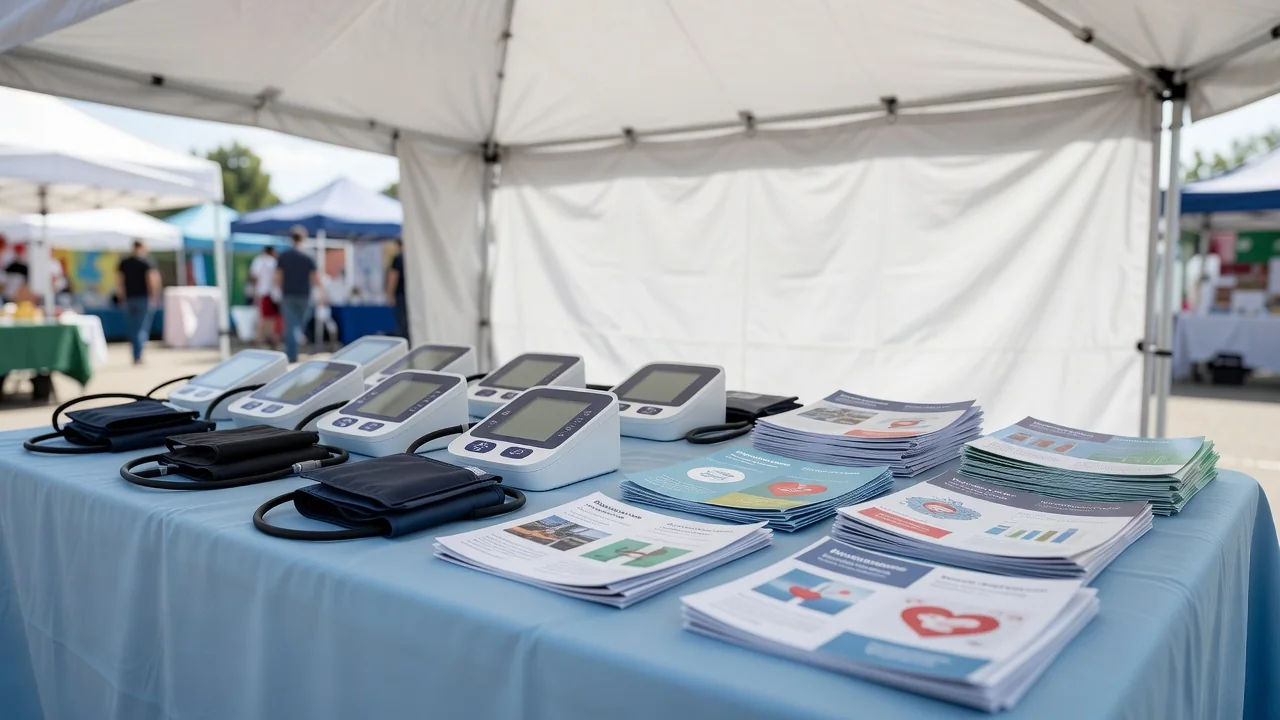
- Screening events. Blood pressure and glucose tables at health fairs, farmers markets, and community centers put residents in front of people who avoid clinics.
- Shelter and free-clinic shifts. Many programs partner with shelters and free clinics, teaching residents to practice with minimal resources and maximal social complexity.
- Public health partnerships. During vaccination campaigns and outbreak responses, residents work alongside county health departments and learn how population medicine actually operates.
The community project requirement
ACGME-accredited programs expect scholarly or quality work with a community dimension. A typical project starts with a gap the resident notices — low colorectal screening rates in one zip code, missed well-child visits after the newborn period — and ends with a measured intervention: a reminder-call workflow, a Saturday screening clinic, a partnership with a local organization. The deliverable is not a poster; it is a changed number.
| Activity | Setting | Skill it builds |
|---|---|---|
| Community assessment | Neighborhoods, public data | Reading population health like a chart |
| School physicals | Schools, gyms | Efficient well-care, adolescent rapport |
| Screening events | Fairs, markets | Reaching patients outside the clinic |
| Free-clinic shifts | Shelters, volunteer clinics | Resource-limited problem solving |
| Community project | Clinic + local partners | Designing and measuring an intervention |
Why it matters after graduation
Physicians who trained with community exposure carry a reflex into practice: when a pattern appears in the exam room — three patients with the same barrier in a month — they look outside the building for the cause and the fix. That reflex is the difference between treating diabetes one prescription at a time and noticing that the nearest affordable pharmacy closed last year.
Community medicine is not charity work bolted onto residency. It is the specialty's original insight, still taught the same way: go where the patients live, and the medicine makes more sense.