
Rural family medicine practice: scope and support
The nearest cardiologist is a three-hour drive over a mountain pass that closes in winter. The hospital has twenty-six beds, two operating rooms, and a CT scanner that was installed in 2019 after a decade of fundraising by the community. The town has 4,200 residents, one grocery store, one school, and one physician who has been there for twenty-two years and is thinking about retirement. This is not a thought experiment — this is a composite of hundreds of rural communities across the country where the family physician is not just a doctor but the entire medical infrastructure. Practicing rural family medicine is not a job description; it is a way of life that reshapes everything from the procedures you perform to the car you drive to the way you shop for groceries alongside your patients. The decision to practice in a rural setting is one of the most consequential choices a family physician can make — and it is a choice that far more graduates consider than actually follow through on, because the gap between the romantic ideal of rural practice and the daily reality is wide, deep, and rarely discussed in residency recruitment brochures.
What defines a rural family medicine practice
The federal government classifies rural areas using several overlapping definitions — Rural-Urban Commuting Area codes, Frontier and Remote Area codes, and the Office of Management and Budget's metropolitan-nonmetropolitan distinction. For the practicing physician, the bureaucratic classification matters less than the practical realities: a rural practice is one where the physician's scope is wider than in an urban setting, where referral networks are thin or nonexistent, where the physician is a recognizable public figure in the community, and where the hospital — if one exists — is small enough that the physician knows every nurse, pharmacist, and lab tech by first name.
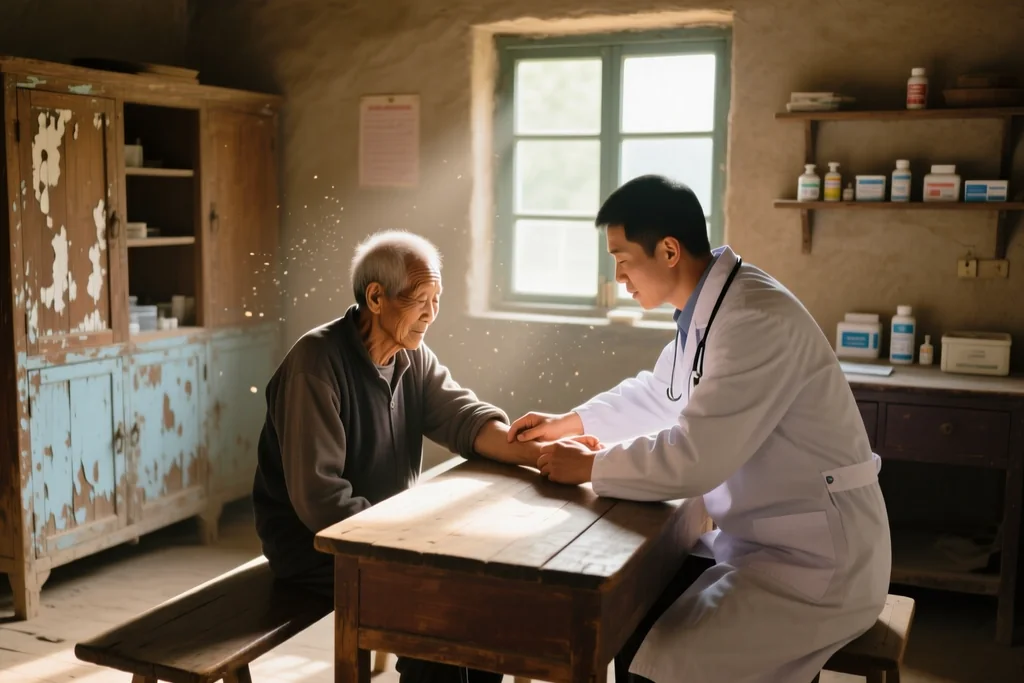
Rural is not a binary category. A town of 15,000 with a regional hospital and visiting specialists twice a week is rural, but it is very different from a town of 800 with a clinic and no hospital. The scope of practice, the lifestyle, and the support needs scale with the degree of rurality. A physician in a 15,000-person town may have a relatively standard outpatient practice with some inpatient coverage. A physician in an 800-person town may be the only medical provider for fifty miles in any direction, covering clinic, emergency department, obstetrics, and nursing home rounds — sometimes in the same day.
The defining characteristic of rural practice is not population size but professional isolation. The rural family physician makes clinical decisions without the safety net of a specialist down the hall. A patient with chest pain in an urban clinic is referred to cardiology within the hour; in a rural clinic, the physician decides whether to treat, transfer, or manage the ambiguity — and lives with the consequences. This autonomy is the greatest attraction of rural practice and its greatest burden.
The expanded scope: procedures and responsibilities beyond the urban norm
The scope of practice in rural family medicine is not a fixed list — it is a function of what the community needs and what the physician is willing and able to provide. The rural family physician who arrives in a community without obstetrical services and begins offering prenatal care and delivery has expanded the scope; the physician who arrives and chooses not to deliver babies has narrowed it. Both choices are legitimate, but the community's needs do not always align with the physician's preferences.
The expanded procedural scope of rural family medicine is one of the most visible differences from urban practice. Procedures that are routinely referred to specialists in urban settings — skin excisions, joint injections, fracture management, prenatal ultrasound, neonatal circumcision, vasectomy, colposcopy, flexible sigmoidoscopy, cardiac stress testing — may be part of the rural physician's daily practice. The physician who is the only provider for a community does not have the luxury of saying "that's not my area" when the alternative is a three-hour drive for the patient.
Inpatient care is another dimension where rural practice differs. Many urban family physicians have no inpatient privileges and have never admitted a patient to the hospital. Rural family physicians routinely admit, manage, and discharge their own patients — and sometimes the patients of other physicians who are off or unavailable. The rural hospital may not have hospitalists, intensivists, or emergency medicine physicians, which means the family physician covers the emergency department, the inpatient floor, and sometimes the ICU. Cross-coverage is not an exception; it is the norm.
Obstetrics is the most debated scope decision in rural family medicine. On one hand, rural communities without obstetrical services have higher rates of preterm birth, infant mortality, and maternal complications — the evidence is clear that local obstetrical care saves lives. On the other hand, providing obstetrics means being available 24 hours a day, carrying malpractice insurance that costs significantly more, and managing obstetric emergencies with limited backup. The physician who chooses to deliver babies in a rural setting is making a commitment that affects every aspect of their life — and the physician who chooses not to is leaving a gap that may have serious consequences for the community.
To understand how scope of practice varies across different practice settings, it helps to compare the procedural and clinical responsibilities that are typical in each environment.
| Practice characteristic | Urban family medicine | Suburban family medicine | Rural town (5,000–15,000) | Remote rural (<2,000) |
|---|---|---|---|---|
| Typical patient panel size | 1,500–2,500 | 1,200–2,000 | 1,000–1,800 | 800–1,500 |
| Procedural scope | Limited; most referred | Moderate; some in-office | Broad; most in-office | Very broad; nearly all in-office |
| Inpatient coverage | Rare; hospitalists | Occasional | Regular | Routine |
| Emergency department coverage | None | Rare | Periodic | Frequent |
| Obstetrics | Rare | Some | Common | Very common |
| Nursing home rounds | Occasional | Regular | Regular | Routine |
| Home visits | Almost never | Rare | Occasional | Periodic |
| Specialist referral distance | <10 miles | 10–30 miles | 30–90 miles | 90+ miles |
| Telemedicine availability | Widely available | Available | Limited | Minimal |
| Typical on-call frequency | 1 in 10+ | 1 in 5–8 | 1 in 3–5 | 1 in 2–3 |
| Backup availability | Multiple colleagues | Several colleagues | 1–2 colleagues | Often solo |
The comparison makes clear that rural practice is not a single category but a spectrum — and that the physician considering rural practice must understand where on that spectrum their target community falls. The remote rural column describes a practice that is fundamentally different from urban family medicine — it is closer to the general practice model of mid-twentieth-century medicine, where one physician provided comprehensive care across all settings.
The lifestyle: what daily life actually looks like
The most common question aspiring rural physicians ask is about work-life balance — and the honest answer is that rural family medicine does not have work-life balance in the way the term is understood in urban practice. The rural family physician's life and work are deeply intertwined; the boundaries between professional and personal time are porous because the physician is always on call for the community, even when not formally on duty.
A typical day in a remote rural practice might begin at 7 AM with hospital rounds — checking on the patient admitted overnight with pneumonia, the postoperative patient from the previous day's appendectomy, and the new mother and baby from last night's delivery. Clinic starts at 8:30 and runs until 5 PM with a lunch hour that is rarely uninterrupted — the lunch hour is when nursing home calls come in, pharmacy questions arrive, and lab results from morning blood draws need review. After clinic, the physician returns to the hospital for evening rounds, then goes home — but the phone stays on. The physician is first call for the nursing home, second call for the emergency department (the ER nurse calls before activating the transfer protocol), and the person the community calls when they are worried about a family member at 11 PM.
Weekends are not free. In a two-physician town, each physician covers every other weekend — meaning the physician is on call 50% of all weekends. In a solo practice, the physician is on call every weekend unless coverage is arranged from a locum tenens or a neighboring practice. Vacations require planning weeks or months in advance, with coverage arranged by bringing in a temporary physician — at a cost of $1,000 to $2,000 per day — or by asking a neighboring practice to cover, which indebts the physician to that practice for future reciprocal coverage.
The lifestyle is not all sacrifice. Rural communities often offer a quality of life that urban areas cannot match: short commutes, access to outdoor recreation, lower cost of living, strong community connections, and the satisfaction of being known and valued. The physician who lives in a small town knows their neighbors, sees their patients at the grocery store and the school play, and is an integral part of the community fabric. For physicians who value deep relationships and a slower pace of life, the rural lifestyle is not a compromise — it is the point.
The physician as community figure: visibility and boundaries
In a town of 3,000 people, the family physician is a public figure. Patients recognize the physician at the gas station, the school board meeting, the church, the diner, and the Little League game. This visibility is a double-edged sword — it builds trust and connection, but it also erodes the boundaries that urban physicians take for granted.
The rural physician is asked medical questions in the cereal aisle of the grocery store. A patient flags the physician down at the post office to ask about a rash. A parent approaches at a school event to ask whether their child's fever needs to be seen. These interactions are part of the job — and the physician who resents them will be miserable. The physician who handles them with grace, humor, and a gentle redirect to the clinic — "That sounds like it needs a proper look — call the clinic tomorrow and I'll squeeze you in" — builds trust that translates into better patient care.
The visibility also means the physician's personal life is not entirely private. The community knows if the physician is going through a divorce, struggling with health issues, or having financial difficulties — because in a small town, everyone knows everything about everyone. The physician who cannot tolerate this level of transparency will find rural practice suffocating. The physician who accepts it as the price of community membership will find it liberating — because the same community that knows your struggles will show up with a casserole, a babysitter, and a plowed driveway when you need them.
Setting boundaries is essential but looks different in rural practice. The physician who refuses to answer questions in the grocery store is seen as aloof and unapproachable — which damages the patient relationship. The physician who answers every question becomes a 24-hour walk-in clinic with no personal time. The middle ground — acknowledging the question, expressing concern, and redirecting to a scheduled visit — is the rural physician's social skill. It takes practice, and it is not taught in residency.
Financial realities: compensation, debt, and loan repayment
The financial picture of rural family medicine is more favorable than many residents assume — but it is also more complex. The base salary for a rural family physician is often comparable to or slightly lower than an urban salary, but the total compensation can be higher because of several factors: signing bonuses, retention bonuses, productivity incentives, and loan repayment programs that can add $25,000 to $50,000 per year to the effective compensation.
The federal government and many states offer loan repayment programs specifically designed to attract physicians to underserved rural areas. The NHSC (National Health Service Corps) Loan Repayment Program offers up to $50,000 in loan repayment for a two-year commitment in a Health Professional Shortage Area, with the possibility of extension for additional years. The NHSC Students to Service Program offers up to $120,000 for students who commit to serving in a shortage area after residency. Many states have their own programs — some more generous than the federal option — and the Indian Health Service offers loan repayment for physicians serving Native American communities.
Before committing to a rural practice based on loan repayment, physicians should understand the conditions and limitations of these programs.
The financial incentives available to rural physicians are substantial but come with specific obligations that require careful consideration before signing.
Financial support structures for rural family physicians:
- NHSC Loan Repayment Program — up to $50,000 for a two-year commitment in a Health Professional Shortage Area; can be extended for additional two-year terms with additional repayment. Requires full-time clinical practice at an approved site.
- NHSC Students to Service Program — up to $120,000 for medical students who commit to serve in a shortage area for at least three years after residency. Requires application during the final year of medical school.
- State loan repayment programs — most states offer programs that supplement or mirror the NHSC, with varying amounts and commitment periods. Some states offer programs for specific specialties or regions within the state.
- Indian Health Service Loan Repayment — up to $50,000 for a two-year commitment serving American Indian and Alaska Native communities. Available to physicians in various specialties, including family medicine.
- Public Service Loan Forgiveness (PSLF) — physicians employed by a nonprofit or government hospital qualify for PSLF, which forgives the remaining balance on federal loans after 120 qualifying payments. Not exclusive to rural practice but commonly applicable.
- Rural hospital signing bonuses — rural hospitals facing physician shortages often offer signing bonuses of $20,000 to $100,000, sometimes structured as a forgivable loan that is waived if the physician stays for a specified period.
- Retention bonuses — some rural practices offer annual retention bonuses to physicians who stay beyond the initial contract period, typically $10,000 to $25,000 per year.
- Productivity incentives — many rural practices compensate physicians with a base salary plus a productivity bonus based on relative value units (RVUs) or net collection. A busy rural practice can generate significant productivity income.
- J-1 visa waiver programs — international medical graduates who trained on a J-1 visa can obtain a waiver to practice in a shortage area, with the sponsoring facility often providing loan repayment or other incentives.
- Rural Health Clinic (RHC) enhanced reimbursement — certified Rural Health Clinics receive cost-based reimbursement from Medicare and Medicaid, which can be significantly higher than standard fee-for-service — making the practice financially viable in a community that could not otherwise support a physician.
These programs can transform the financial picture of rural practice. A physician with $250,000 in student loans who qualifies for the NHSC program and a state program could eliminate their debt in four to five years — something that would take a decade or more in an urban practice at the same salary. The combination of loan repayment, lower cost of living, and productivity incentives can make rural practice financially more attractive than urban alternatives — but only if the physician is willing to commit to the community and the lifestyle for the duration of the obligation.
Burnout and isolation: the hidden costs of rural practice
The same characteristics that make rural practice attractive — autonomy, breadth of scope, community connection — also make it a high-risk environment for burnout. The rural physician carries an emotional and cognitive load that urban physicians share with colleagues, specialists, and support staff. The solo practitioner in a remote community has no one to debrief with after a difficult case, no one to consult in real time on a complex patient, and no one to cover when personal circumstances demand time away.
Burnout in rural family medicine has specific drivers that differ from urban practice burnout. The urban physician burns out from documentation burden, productivity pressure, and the treadmill of short appointments. The rural physician burns out from on-call frequency, professional isolation, the emotional weight of being the community's only physician, and the guilt of wanting time off when patients depend on them. The rural physician who takes a week off knows that the locum may not know the patients, may miss a subtlety, may not handle a complex situation the way the physician would — and the worry follows them on vacation.
Professional isolation is the less visible but more corrosive challenge. The rural physician does not have a colleague down the hall to run a case by, does not have a journal club to attend, does not have grand rounds with subspecialists presenting the latest evidence. Continuing medical education requires travel — often hours of driving each way — and the cost and time of travel discourage participation. The physician's clinical knowledge can become stale without the daily exchange of ideas that an academic or group practice environment provides.
Support structures that make rural practice sustainable
Despite the challenges, many rural family physicians have long, fulfilling careers — and the difference between those who thrive and those who leave is often the presence of support structures that mitigate the isolation and burnout risk. These structures are not always formal; some are organic community connections, others are institutional programs, and others are technologies that have only recently become viable in rural settings.
Several support mechanisms have proven effective in sustaining rural family physicians, and communities that invest in these structures see higher retention rates and better physician well-being.
The support structures that make rural practice sustainable operate at multiple levels — from the individual physician's habits to the institutional and technological systems that connect isolated practitioners to the broader medical community.
Support structures for rural family physicians:
- Telemedicine and e-consults — virtual consultation with specialists allows the rural physician to get expert input without transferring the patient. E-consult platforms — where the physician submits a clinical question and receives a specialist response within 48 hours — are particularly valuable for dermatology, psychiatry, and cardiology questions.
- Locum tenens coverage — temporary physician coverage for vacations, sick leave, and CME attendance. Communities that budget for regular locum coverage give their physician permission to take time off without guilt, which is one of the most effective burnout prevention strategies.
- Rural physician networks — informal and formal networks of rural physicians who connect regularly by phone, video, or in-person meetings to discuss cases, share experiences, and provide mutual support. Some states have formal rural physician organizations that host annual conferences and facilitate peer connections.
- Hub-and-spoke models — regional medical centers (hubs) that provide backup, tele-consultation, and transfer support to rural clinics (spokes). The physician in the spoke clinic knows they can call the hub for advice, stabilization guidance, and transfer — which reduces the isolation without requiring the physician to leave the community.
- Project ECHO — the Extension for Community Healthcare Outcomes model connects rural physicians with academic specialists through regular video case conferences, allowing rural physicians to present cases, receive expert guidance, and learn from the cases presented by peers.
- Rural training tracks in residency — programs that train residents in rural settings, producing graduates who are more likely to practice rurally and who enter practice with the skills and expectations needed for rural work.
- Shared call arrangements — two or more rural practices sharing call coverage, so that each physician is on call less frequently. This requires coordination and trust between practices but dramatically improves quality of life.
- Community health worker programs — trained community members who support the physician by conducting home visits, medication reconciliation, chronic disease education, and social determinants screening. Community health workers extend the physician's reach and reduce the workload of managing complex patients alone.
- Loan repayment and financial incentives — as discussed above, these programs reduce the financial stress that contributes to burnout and make the economic case for staying in the community stronger over time.
- Spousal and family employment support — one of the most common reasons rural physicians leave is the spouse's inability to find suitable employment. Communities that proactively help the physician's partner find work — through local businesses, remote work arrangements, or positions within the healthcare system — significantly improve retention.
The most effective rural communities do not rely on a single support structure but build a network of supports that address the physician's professional, personal, and financial needs simultaneously. A community that offers loan repayment but no locum coverage may attract a physician who leaves after two years. A community that offers peer support but no spousal employment may lose a physician whose partner is unhappy. The comprehensive approach — addressing the full spectrum of the physician's life — is what creates the conditions for long-term rural practice.
The rural training track advantage
Residency programs that include rural training tracks — longitudinal rotations in rural communities, often lasting six to twelve months — produce graduates who are significantly more likely to choose rural practice. The rural training track works because it addresses the three main barriers to rural practice: lack of exposure, lack of confidence in rural skills, and lack of understanding of the rural lifestyle.
Exposure is the first barrier. Most medical students and residents train in urban academic centers, where the patient population, the scope of practice, and the lifestyle are fundamentally different from rural settings. A resident who has never spent more than a month in a rural community cannot make an informed decision about rural practice — and the default choice is to stay in the familiar urban environment. Rural training tracks immerse the resident in the community long enough for the experience to be real, not a vacation.
Confidence is the second barrier. A resident who has never managed an obstetric emergency without an obstetrician available, never managed a trauma patient without a surgeon on call, never made a transfer decision in bad weather, does not know whether they can handle the scope. Rural training tracks provide supervised experience with these scenarios — giving the resident the evidence that they can manage, and the humility to know when to transfer.
Lifestyle understanding is the third barrier. The resident who romanticizes rural practice from an urban apartment is making a decision based on fantasy. The resident who has lived in a rural community for nine months, shopped at the local grocery store, attended the community events, and experienced the on-call reality — that resident is making an informed decision. Rural training tracks do not guarantee that the resident will choose rural practice, but they ensure that the decision — whether to go rural or not — is based on experience, not imagination.
Choosing a rural community: what to look for and what to avoid
Not all rural practices are created equal, and the physician evaluating a rural opportunity must look beyond the salary and the loan repayment to assess whether the community is a good fit and whether the practice is sustainable. The warning signs of an unsustainable rural practice are not always visible during a site visit — they emerge over months and years as the physician settles in.
The physician considering rural practice should investigate several dimensions of the community and the practice before signing a contract.
Before signing a rural practice contract, the physician should investigate several dimensions of the opportunity that determine whether the practice will be sustainable.
Key factors to evaluate when choosing a rural practice:
- Call frequency and coverage — how many physicians share call? Is there a locum budget? What happens if the physician needs emergency time off? A solo practice with no locum coverage is a recipe for burnout within two years.
- Hospital infrastructure — does the hospital have the equipment the physician needs? Is there a CT scanner, a lab that runs basic chemistry and hematology, a pharmacy that stocks the medications the patient population needs? A hospital that has deferred maintenance and outdated equipment is a daily frustration.
- Specialist access — what telemedicine services are available? How far is the nearest specialist in each discipline? Is there a hub-and-spoke relationship with a regional center? No specialist access means every complex case is a transfer — and transfers take time, money, and risk.
- Community engagement — does the community want a physician, or does it want a prescription dispenser? Communities that value the physician as a community member, support the practice, and participate in health initiatives are more likely to retain the physician long-term.
- Spousal and family fit — can the partner find work? Are there schools that meet the family's educational standards? Is the community welcoming to outsiders? The most common reason for early departure is family dissatisfaction, not professional dissatisfaction.
- Financial sustainability of the practice — is the practice profitable, or is it surviving on grants and subsidies that may end? What is the payer mix? A practice with 60% Medicaid and no cost-based reimbursement may struggle to pay the physician a competitive salary.
- Physician turnover history — how many physicians have left in the past ten years, and why? A practice that has had three physicians leave in five years has a problem that the job posting will not mention.
- Contract terms — is there a restrictive covenant? What is the malpractice coverage? Is tail coverage provided if the physician leaves? What is the termination clause? Rural contracts sometimes include restrictive covenants that prevent the physician from practicing in the area after departure — which can be devastating in a community with only one practice.
- Housing and cost of living — is housing available and affordable? Some rural communities have housing shortages that make it difficult for the physician to find a home. The cost of living may be lower, but if housing is not available, the lower cost is irrelevant.
- Cultural and recreational fit — does the community offer the activities, the social environment, and the cultural amenities that the physician and family value? A community with no coffee shop, no bookstore, and no movie theater may be idyllic for one physician and isolating for another.
Evaluating these factors requires more than a one-day site visit. The physician considering rural practice should spend several days in the community — not just at the clinic and the hospital, but at the grocery store, the school, the community center, and the local diner. Talking to people who are not patients — the librarian, the pastor, the school principal — provides a perspective that the practice's recruitment materials will not include.
The transition from residency to rural practice
The physician who graduates residency and moves to a rural community faces a transition that is qualitatively different from the transition to an urban practice. In an urban practice, the new physician has colleagues, specialists, and institutional support to ease the transition. In a rural practice, the new physician is often the only physician — and the learning curve is steep.
The first six months in a rural practice are the most critical period for retention. The physician who feels supported, welcomed, and competent during this period is likely to stay; the physician who feels overwhelmed, isolated, and underprepared is likely to leave. The best rural practices assign a mentor — either a senior physician in the practice or a physician in a neighboring community — who is available for phone consultation, case discussion, and moral support. The worst rural practices drop the new physician into the clinic on day one with a full schedule and no orientation.
The scope gap is the most common challenge. Even graduates of rural training tracks find that the reality of independent rural practice includes procedures and clinical scenarios they did not encounter in residency. The physician who has done five supervised colonoscopies in residency and is now expected to do them independently needs a plan for the first few — proctoring by a visiting specialist, a refresher course, or a period of observation at a high-volume center. Practices that acknowledge this gap and provide support for closing it retain physicians; practices that expect the new physician to figure it out lose them.
The patient relationship in rural practice: deeper and longer
The patient-physician relationship in rural practice has a depth that is difficult to replicate in urban settings. The rural physician knows their patients as people — not just as medical histories. The patient who comes in for hypertension is the same person the physician saw at the school board meeting, the same person whose daughter babysits the physician's children, the same person who plowed the physician's driveway after the blizzard. This familiarity creates a level of trust that is the foundation of effective primary care — and it is also the source of the emotional weight that contributes to burnout.
The longitudinal nature of the relationship is even more pronounced. In urban practice, patients change insurance, change jobs, change clinics — and the continuity is broken. In rural practice, the patient who started seeing the physician at age 18 for a sports physical is the patient who comes in at 28 for prenatal care, at 38 for cholesterol management, at 48 for a colonoscopy referral, at 58 for diabetes management, and at 68 for end-of-life planning. The physician who has been part of this journey has a context that no medical record can replicate — and that context makes the physician more effective, more trusted, and more valued.
The relationship also extends beyond the clinic. The rural physician is invited to weddings, funerals, graduations, and community celebrations. The physician who attends these events — not as the doctor, but as a community member — strengthens the bonds that make the practice sustainable. The physician who declines every invitation and maintains a strict professional distance may avoid the emotional entanglement that some find burdensome — but also misses the connection that makes rural practice rewarding.
Rural obstetrics: the highest-stakes scope decision
The decision to provide obstetrics in a rural setting is the single most consequential scope decision a family physician makes. Rural communities that lose obstetrical services experience measurable increases in adverse outcomes — preterm births, NICU admissions, and infant mortality. The evidence is clear: distance to obstetrical care harms mothers and babies. Yet the proportion of rural family physicians providing obstetrics has declined steadily over the past two decades, driven by malpractice costs, lifestyle demands, and the increasing availability of regional perinatal centers.
The physician who chooses to provide rural obstetrics accepts a set of realities: 24-hour availability for labor and delivery, the possibility of emergent cesarean section with limited surgical backup, higher malpractice premiums (often $10,000 to $30,000 more per year), and the emotional weight of managing obstetric emergencies where the outcome affects not just one patient but a family and a community. The physician who chooses not to provide obstetrics accepts a different reality: referring every pregnant patient to a distant provider, knowing that some patients will not make the drive for prenatal visits, and living with the knowledge that the community's obstetric outcomes may deteriorate.
This decision is not made in isolation. It is made in the context of the hospital's capability (is there an OR available 24 hours? Is anesthesia available?), the community's need (how many births per year? Is there a certified nurse-midwife?), and the physician's personal circumstances (does the physician have a partner who can share call? Is the physician's family supportive of the commitment?). The best rural hospitals and communities support the physician's decision either way — and the worst ones pressure the physician to provide a service they are not comfortable providing.
Technology and the rural physician: what helps and what hinders
Technology has changed rural practice in ways that both alleviate and exacerbate isolation. Telemedicine, when it works, connects the rural physician to specialists and resources that were previously unreachable. E-consult platforms allow the physician to submit a clinical question and receive a specialist response within days — turning a three-hour referral into a digital conversation. Tele-stroke programs allow the rural physician to connect with a neurologist for acute stroke management, enabling thrombolysis decisions that would otherwise require transfer. Tele-psychiatry brings mental health services to communities that have never had a psychiatrist.
The electronic health record (EHR), however, has been a mixed blessing in rural practice. The urban physician who struggles with documentation burden is not alone — they have IT support, scribes, and optimization teams. The rural physician who struggles with the EHR often has no IT support, no scribe, and an EHR that was designed for a large multi-specialty group and does not fit the workflow of a solo rural practice. The documentation burden in rural practice can be higher than urban practice because the rural physician manages more aspects of care — inpatient, outpatient, emergency, nursing home — each with its own documentation requirements.
Point-of-care ultrasound has emerged as a particularly valuable technology in rural practice. The rural physician who can perform a bedside ultrasound to assess a patient with abdominal pain, evaluate cardiac function in a patient with dyspnea, or guide a joint injection has a diagnostic tool that extends the physical exam and reduces the need for transfer. Training in point-of-care ultrasound is increasingly available through continuing education courses, and some residency programs now include it as a core competency.
Conclusion: the calling and the cost
Rural family medicine is not a career path for everyone — and that is not a judgment, it is a recognition that the combination of clinical breadth, professional isolation, community visibility, and lifestyle commitment requires a specific temperament. The physician who thrives in rural practice is one who values autonomy over specialization, relationships over efficiency, community integration over professional boundaries, and the satisfaction of being needed over the convenience of being supported. The physician who is honest about their own needs — for colleagues, for boundaries, for cultural amenities, for predictable hours — will make the right decision, whether that decision is to go rural or to stay urban. The physician who goes rural without honest self-assessment will leave within two years, and the community will be worse for it — because every rural physician departure reinforces the narrative that rural practice is unsustainable, when the truth is that rural practice is sustainable for the right physician in the right community with the right support. The right physician is not the one who sacrifices everything for the community — that physician burns out. The right physician is the one who builds a life in the community, with boundaries and support and time off, and who stays for twenty years because the life they built is worth staying for.